
Anxiety and depression can affect nearly every part of daily life. You may have trouble concentrating, sleeping, maintaining relationships, keeping up with school or work, or simply feeling like yourself. For some people, symptoms come and go. For others, they can become a persistent part of everyday life.
At Michael Schreiber Therapy in Brookline, treatment focuses on helping you understand what is contributing to your symptoms and finding practical ways to reduce their impact. Therapy may involve cognitive behavioral therapy, psychodynamic approaches, motivational interviewing, medication consultation, or a combination of strategies based on your needs.
Here are nine anxiety and depression therapy strategies that can help you make meaningful progress.
In this article:
–Use CBT to change unhelpful thought and behavior patterns that can reinforce anxiety and depression.
–Build practical coping skills for stress, sleep, routines, and relationships to support daily life in Brookline.
–Combine therapy with medication management when appropriate for a more personalized anxiety and depression treatment plan.
We at Michael Schreiber Therapy specialize in anxiety therapy, couples counseling, and medication management in Brookline, MA, serving Boston, Allston, Brighton, Cambridge, and Newton. Our work is patient-centered, direct, and compassionate, helping students, couples, adults, and members of the LGBTQIA+ community reduce symptoms, improve communication, and move toward steadier daily life. To schedule support, contact us or call (617) 730-8048.
1. Identify the Thought Patterns Fueling Anxiety and Depression
One of the first goals of therapy is often identifying the thoughts that contribute to distress.
Anxiety can create patterns of overthinking, anticipating problems, or assuming the worst outcome. Depression may lead to thoughts that reinforce hopelessness, low motivation, or self-criticism.
Cognitive behavioral therapy for anxiety and depression helps you recognize these patterns and respond to them differently. Instead of automatically accepting every thought as true, CBT gives you tools for questioning whether your thinking is accurate, useful, and supported by evidence.
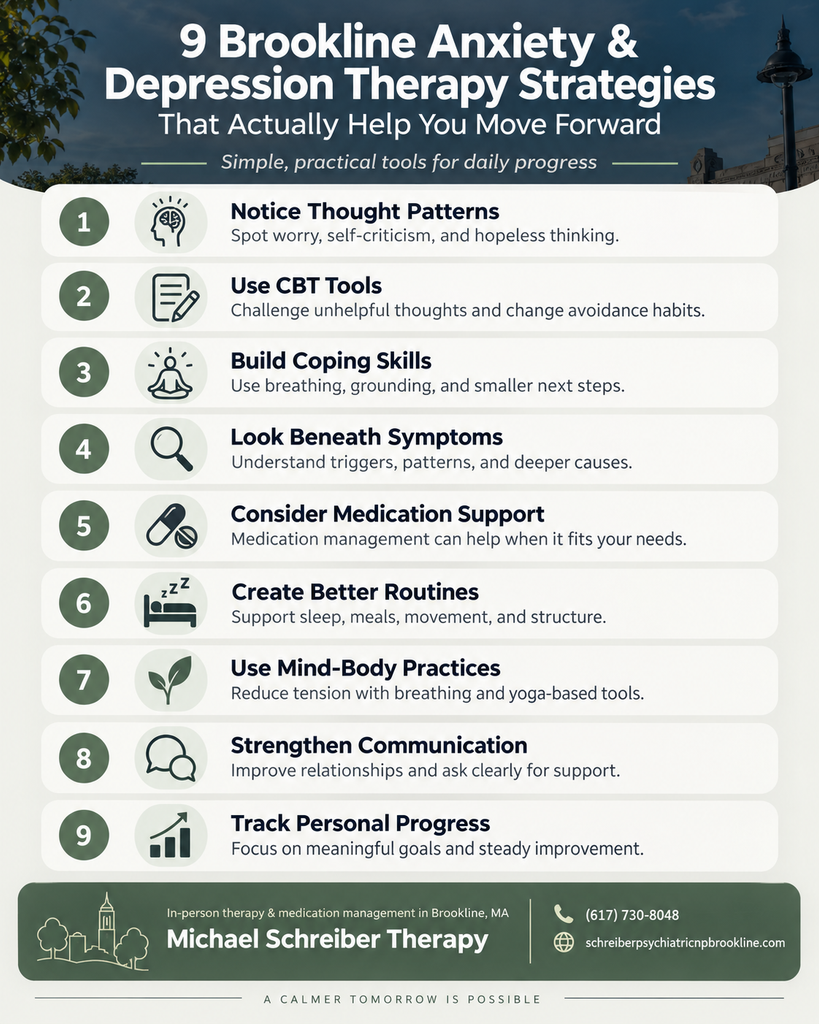
2. Use CBT to Change Unhelpful Behaviors
Thoughts and behaviors often reinforce one another.
Avoiding a stressful situation may bring short-term relief from anxiety, but repeated avoidance can make that fear stronger. Depression can create a similar cycle when low energy leads to isolation and reduced activity, which can further affect mood.
CBT for anxiety and CBT for depression often focus on making small behavioral changes that help interrupt these cycles. Progress may involve gradually returning to activities, communicating more openly, or building routines that support daily functioning.
3. Develop Practical Coping Skills for Stress
Therapy should give you skills you can use outside the office.
These tools may help you manage stressful moments before symptoms feel overwhelming. Different techniques work for different people, but common strategies may include:
- Slow, controlled breathing
- Grounding exercises
- Breaking large problems into smaller steps
- Creating more consistent sleep routines
- Scheduling restorative activities
- Recognizing early signs of emotional overload
- Setting healthier boundaries with work, school, or relationships
Learning how to respond to stress more intentionally can make anxiety and depression easier to manage over time.
4. Understand What Is Beneath the Symptoms
Sometimes anxiety or depression connects to more than what is happening right now.
Psychodynamic therapy may help you explore long-standing emotional patterns, relationships, past events, and beliefs that continue to influence how you respond today. Understanding these connections can help you recognize why certain situations repeatedly trigger anxiety, sadness, frustration, or withdrawal.
Therapy does not require endlessly revisiting the past. The goal is to better understand what affects you so you can make more intentional choices in the present.
5. Consider Medication as Part of Treatment
For some people, therapy alone provides meaningful symptom relief. Others may benefit from medication for anxiety and depression alongside psychotherapy.
Medication management may include discussing your symptoms, reviewing previous medications, considering side effects, monitoring progress, and making adjustments when appropriate.
When it comes to anxiety depression medication, treatment should focus on your individual symptoms rather than using the same approach for every patient.
At Michael Schreiber Therapy, psychiatric care and medication prescription and management can work alongside therapy to create a more coordinated treatment plan.
6. Build Better Daily Routines
Anxiety and depression can disrupt basic routines, including sleep, meals, exercise, schoolwork, and social connection.
Therapy can help you create structure without making your schedule feel rigid or unrealistic. Even small changes can support better emotional regulation.
For university students, graduate students, and PhD students in Brookline, Boston, Cambridge, and nearby communities, routines can be especially helpful during demanding academic periods and major life transitions.
7. Use Mind and Body Techniques to Reduce Tension
Mental health symptoms often affect the body as much as the mind.
Anxiety may cause muscle tension, shallow breathing, restlessness, headaches, or difficulty sleeping. Depression can affect energy, appetite, movement, and physical motivation.
Breathing exercises, yoga principles, and other mind and body practices can help reduce physical tension and bring attention back to the present moment. These strategies can complement psychotherapy for anxiety and depression rather than replacing it.
8. Strengthen Communication and Relationships
Anxiety and depression can make it difficult to explain what you need, especially when you feel overwhelmed or disconnected.
Therapy may help you communicate more clearly, manage conflict, and recognize unhealthy patterns in relationships. This can be useful for individuals as well as people seeking couples counseling, couples therapy, marriage counseling, premarital counseling, or relationship counseling.
Improving communication can reduce stress at home and create stronger support systems during difficult periods.

9. Focus on Progress That Is Measurable and Personal
Mental health treatment does not have to follow one rigid definition of success.
For one person, progress may mean sleeping through the night. For another, it may mean returning to class, reducing panic attacks, improving communication with a partner, managing ADHD symptoms, or feeling less overwhelmed by everyday responsibilities.
A patient-centered approach focuses on your specific goals — then adjusts treatment based on what is actually helping.
Anxiety and Depression Therapy in Brookline
You do not have to wait until anxiety or depression becomes severe before asking for support.
Michael Schreiber Therapy provides in-person psychotherapy and psychiatric care in Brookline for adults, students, couples, members of the LGBTQIA+ community, and people managing anxiety, depression, ADHD, mood disorders, bipolar disorder, PTSD, sleep concerns, and other mental health needs.
The private office is located in the S.S. Pierce Building near the Coolidge Corner Green Line stop, making it convenient for people living or studying in Brookline, Boston, Allston, Brighton, Cambridge, and Newton.
Treatment may include anxiety therapy, depression therapy, cognitive behavioral therapy, medication management, stress reduction, relationship counseling, or a combination of approaches based on your needs.
If anxiety or depression has started interfering with your daily life, relationships, work, or school, it may be time to talk with someone about what could help.
Call Michael Schreiber Therapy at (617) 730-8048 to discuss therapy and medication management services in Brookline.
Check out other articles:
- 7 Essential Medication Management Questions to Ask in Brookline
- 5 Ways Your Relationship Could Benefit From Couples Counseling in Brookline
- How Therapy for Anxiety and Depression in Brookline Can Transform Daily Life
- 9 Signs it May Be Time for Depression Therapy in Brookline
- 5 Things to Look for When Hiring a Couples Counseling Provider in Brookline
- A Guide to Medication Management and Prescription Services in Brookline
- 9 Key Signs It May Be Time to Seek Therapy for Anxiety in Brookline