
Depression does not always look like constant sadness. It may appear as exhaustion, irritability, isolation, trouble concentrating, or a growing sense that everyday responsibilities require too much effort. Depression therapy in Brookline can help you understand these changes, develop practical coping skills, and work toward greater stability.
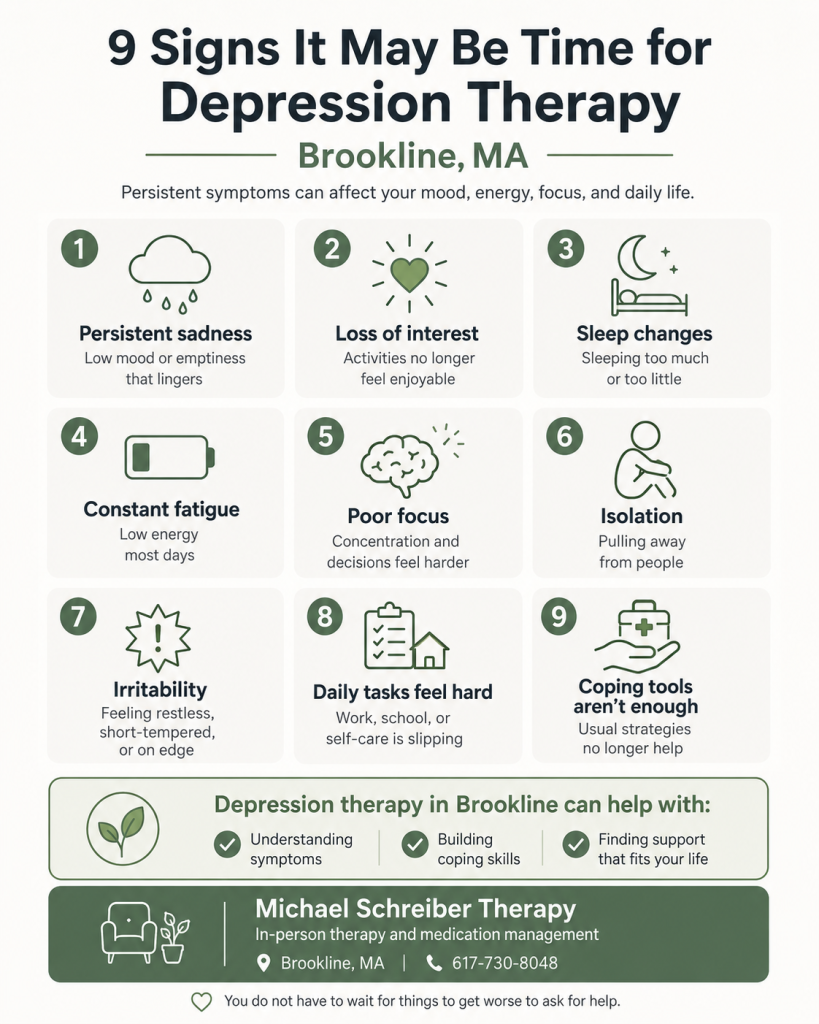
One difficult week does not necessarily mean you have depression. However, persistent symptoms that affect your relationships, studies, work, or personal care deserve attention. Here are nine signs that it may be time to speak with a depression therapist.
In this article:
–Notice persistent changes: Ongoing sadness, fatigue, isolation, poor sleep, or loss of interest may signal a need for depression therapy in Brookline.
–Watch daily functioning: Trouble managing work, school, relationships, or personal care can mean extra support would help.
–Consider local treatment options: Michael Schreiber Therapy offers in-person depression therapy and medication management near Coolidge Corner in Brookline.
We at Michael Schreiber Therapy specialize in anxiety therapy, couples counseling, and medication management in Brookline, MA, serving Boston, Allston, Brighton, Cambridge, and Newton. Our work is patient-centered, direct, and compassionate, helping students, couples, adults, and members of the LGBTQIA+ community reduce symptoms, improve communication, and move toward steadier daily life. To schedule support, contact us or call (617) 730-8048.
1. Sadness or Emptiness Has Become Persistent
Everyone has periods of sadness, disappointment, and emotional fatigue. Depression may feel different because the sadness remains even when your circumstances change. You might also feel numb, empty, disconnected, or unable to imagine feeling better.
The National Institute of Mental Health identifies a persistent sad, anxious, or empty mood as a common sign of depression. Symptoms can vary among individuals, so your emotional state may not match someone else’s description.
Therapy provides a private setting where you can talk honestly about these feelings without minimizing them or worrying about burdening someone close to you.
2. You Have Lost Interest in Activities You Once Enjoyed
You may stop looking forward to hobbies, exercise, social events, intimacy, or time with people you care about. Activities that once helped you recharge may begin to feel pointless or exhausting.
Loss of interest or pleasure is one of the primary symptoms associated with depression. A depression therapist can help you identify what changed and take manageable steps toward reconnecting with meaningful parts of your life.
Progress does not require forcing yourself to feel cheerful. It may begin with understanding why you have withdrawn and finding realistic ways to become engaged again.
3. Your Sleep Patterns Have Changed
Depression can make it difficult to fall asleep, stay asleep, or wake at your usual time. It can also cause you to sleep much longer than normal while still feeling tired.
Poor sleep can affect mood, memory, patience, and motivation. Over time, depression and disrupted sleep may reinforce each other. Therapy can help you examine thought patterns, stressors, routines, and behaviors that may contribute to this cycle.
Medication management may also be considered when sleep problems occur alongside other significant symptoms.
4. You Feel Tired Most of the Time
Depression-related fatigue can make simple tasks feel unusually difficult. Answering emails, attending class, preparing food, or completing household chores may require more energy than you have.
This is not a character flaw or a sign that you need to “try harder.” Reduced energy and increased fatigue are recognized symptoms of depression.
Depression therapy can help you create realistic routines, address self-critical thoughts, and find practical ways to care for yourself while your energy improves.
5. Concentration and Decision-Making Feel Harder
Students and working professionals may first notice depression through a change in performance. You might reread the same paragraph, forget appointments, miss deadlines, or feel overwhelmed by basic decisions.
Difficulty concentrating, remembering details, and making decisions can occur with depression. For university students, graduate students, and PhD candidates, these symptoms may feel especially concerning because academic responsibilities rarely slow down.
Therapy can support you in managing expectations, organizing priorities, and addressing the emotional concerns that interfere with focus.
6. You Are Withdrawing From Other People
You may decline invitations, stop returning messages, avoid your partner, or spend more time alone. Sometimes isolation feels easier because social interaction requires energy. You may also worry that others will judge you or fail to understand.
When it comes to depression therapy, you do not need to wait until isolation has affected every relationship in your life.
A therapist can help you explore what makes connection difficult and develop ways to communicate your needs. Couples counseling may also help when depression affects affection, communication, responsibilities, or conflict within a relationship.
7. You Feel Irritable, Restless, or Easily Frustrated
Depression is often associated with sadness, but it can also appear as anger, impatience, agitation, or restlessness. You may react more strongly to minor inconveniences or feel constantly on edge.
Irritability and frustration are recognized signs of depression, even when sadness is not the most noticeable symptom.
Therapy can help you recognize emotional triggers and respond to them more intentionally. Cognitive behavioral therapy for depression may be useful for identifying thoughts that contribute to anger, hopelessness, or harsh self-judgment.

8. Your Daily Responsibilities Are Becoming Difficult
Depression can affect personal care, household tasks, work, school, parenting, and relationships. You may notice changes such as:
- Missing classes, appointments, or work deadlines
- Struggling to shower, eat regularly, or keep your space organized
- Avoiding bills, emails, or important decisions
- Using alcohol or other substances to manage your mood
- Falling behind despite caring about your responsibilities
Depression becomes especially important to address when symptoms interfere with daily functioning. Seeking support before everything reaches a crisis point can make treatment feel more manageable.
9. Your Usual Coping Strategies Are No Longer Helping
Exercise, yoga, breathing practices, time with friends, and changes in routine may support emotional health. At times, however, these tools are not enough on their own.
Needing professional care does not mean you failed. It means your symptoms may require a more structured approach — such as psychotherapy, cognitive behavioral therapy, medication consultation, or a combination of services.
A psychiatric nurse practitioner can evaluate your symptoms, discuss medication for anxiety and depression when appropriate, and monitor how treatment affects your mood, sleep, concentration, and daily functioning.
How Depression Therapy in Brookline Can Help
Depression treatment should reflect your needs, concerns, identity, and goals. Michael Schreiber Therapy uses a patient-centered, multimodal approach that may include CBT for depression, psychodynamic therapy, motivational interviewing, medication prescription and management, and mind-body practices such as yoga and breathing.
Care is available for college and graduate students, members of the LGBTQIA+ community, people in recovery, couples, and adults managing depression, anxiety, ADHD, mood disorders, sleep concerns, or life transitions.
The private office is located in the S. S. Pierce Building near the Coolidge Corner Green Line stop. In-person psychiatric care and therapy are available for people in Brookline, Boston, Allston, Brighton, Cambridge, and Newton.
Speak With a Depression Therapist in Brookline
You do not have to prove that your symptoms are severe enough before asking for help. If depression has begun affecting your energy, relationships, studies, work, or ability to care for yourself, speaking with a therapist can offer clarity and support.
Michael Schreiber Therapy provides depression therapy, psychiatric care, and medication management in a private Brookline office. Call (617) 730-8048 or visit schreiberpsychiatricnpbrookline.com to ask about scheduling an appointment.
If you are in immediate danger or believe you may harm yourself or someone else, contact emergency services or go to the nearest emergency department.
Check out other articles: