
Medication can play an important role in treating anxiety, depression, ADHD, mood disorders, sleep concerns, and other mental health conditions. Still, finding the right medication plan is often more involved than simply receiving a prescription. Good psychiatric care includes thoughtful evaluation, ongoing communication, and regular adjustments based on how you are feeling.
If you are considering medication management in Brookline, asking the right questions can help you better understand your treatment and take an active role in your care. At Michael Schreiber Therapy, medication consultation and management are approached from a patient-centered perspective that considers symptoms, lifestyle, therapy goals, and overall well-being.
Here are seven important questions to consider asking during a medication management appointment.
In this article:
-Ask how your medication should help, when to expect changes, and what side effects to watch for.
-Use regular medication management in Brookline to review dosage, progress, interactions, and treatment goals.
-Consider combining medication with therapy in Brookline for anxiety, depression, ADHD, mood disorders, and other mental health needs.
We at Michael Schreiber Therapy specialize in anxiety therapy, couples counseling, and medication management in Brookline, MA, serving Boston, Allston, Brighton, Cambridge, and Newton. Our work is patient-centered, direct, and compassionate, helping students, couples, adults, and members of the LGBTQIA+ community reduce symptoms, improve communication, and move toward steadier daily life. To schedule support, contact us or call (617) 730-8048.
1. What Is This Medication Intended to Help With?
Before starting a psychiatric medication, it is helpful to understand exactly what symptoms your provider hopes to address.
For example, medication for anxiety and depression may target persistent worry, low mood, difficulty concentrating, irritability, changes in sleep, or physical symptoms of anxiety. ADHD medication treatment may focus on attention, organization, impulsivity, or executive functioning.
Ask your provider what improvements you should realistically look for. Clear expectations make it easier to evaluate whether a medication is helping over time.
Medication management should focus on meaningful changes in your daily life, not simply prescribing medication because a diagnosis is present.
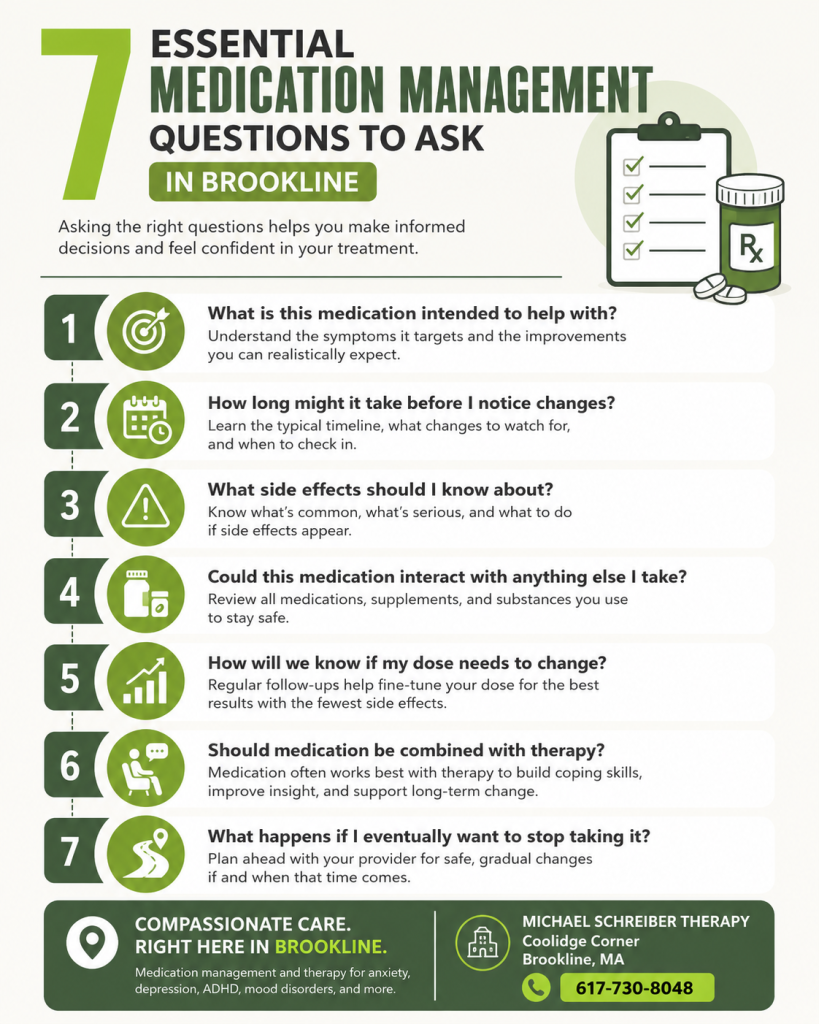
2. How Long Might It Take Before I Notice Changes?
Psychiatric medications do not all work on the same timeline. Some medications may produce noticeable changes relatively quickly, while others may take several weeks before their full effect becomes clearer.
Your psychiatric provider can explain what to expect based on the medication being prescribed and your individual circumstances.
It may also help to ask:
- What changes should I notice first?
- How will we measure whether the medication is working?
- When should we schedule a follow-up appointment?
- What should I do if I have questions before my next visit?
- At what point might we consider adjusting the medication?
Knowing the general timeline can help you participate more confidently in your treatment plan.
3. What Side Effects Should I Know About?
Understanding possible side effects is an important part of medication management. Ask which effects are relatively common, which may improve with time, and which should prompt you to contact your provider.
A thoughtful medication consultation should also consider your sleep, appetite, energy level, concentration, physical health, and other medications you take.
Your provider may recommend adjusting the dose, changing when you take the medication, or considering another medication if side effects interfere with your quality of life.
The goal is not simply symptom reduction. Treatment should also support your ability to function at school, work, home, and in your relationships.
4. Could This Medication Interact With Anything Else I Take?
Tell your provider about prescription medications, over-the-counter medications, vitamins, and other substances you regularly use.
Medication interactions can influence how well a psychiatric medication works and how your body responds to it. Giving your provider a complete picture helps them make more informed decisions about your psychiatric care.
This conversation can be especially important if multiple providers prescribe medications for you. Keeping an updated medication list can make appointments easier and help everyone involved in your care stay informed.
5. How Will We Know If My Dose Needs to Change?
Finding an appropriate dosage often requires observation and communication.
A medication may help somewhat but leave certain symptoms unchanged. Another medication may work well at a lower dose, while increasing it could create unwanted effects. Individual responses vary, which is why ongoing medication management matters.
When it comes to psychiatric medication, regular follow-up gives you and your provider an opportunity to discuss what has changed and decide what makes sense next.
Try to be specific about your daily functioning. Changes in sleep, motivation, anxiety, mood, attention, relationships, and stress levels can all provide useful information.
6. Should Medication Be Combined With Therapy?
For many people, medication works best as one part of a broader mental health treatment plan.
Psychotherapy for anxiety, cognitive behavioral therapy for depression, cognitive behavioral therapy for OCD, psychodynamic therapy, motivational interviewing, stress reduction techniques, and mind-body practices may complement medication treatment.
At Michael Schreiber Therapy, care can incorporate therapy and medication management in the same practice. This approach allows treatment to consider both symptom relief and the underlying patterns affecting your quality of life.
For someone receiving anxiety therapy in Brookline, for example, medication may reduce symptoms enough to make coping skills and therapeutic work easier to practice. Someone managing depression may use medication alongside therapy to address thoughts, behaviors, relationships, and daily routines.
Treatment should fit the person — not force the person into one treatment model.

7. What Happens If I Eventually Want to Stop Taking the Medication?
It is reasonable to ask about the long-term plan before you begin treatment.
Some people use psychiatric medication for a limited period, while others benefit from longer-term medication management. The right approach depends on your symptoms, history, response to treatment, and personal goals.
If you eventually want to reduce or discontinue medication, talk with your psychiatric provider first. Some medications require gradual dose changes rather than stopping suddenly.
Having this conversation early can help you understand that medication management is an ongoing process. Your treatment can change as your needs change.
Medication Management and Therapy in Brookline, MA
Choosing a psychiatric provider involves more than finding someone who can write a prescription. You should feel comfortable asking questions, discussing concerns, and participating in decisions about your treatment.
Michael Schreiber Therapy provides in-person psychiatric care, medication consultation, medication prescription and management, and psychotherapy in Brookline. The practice works with university students, graduate and PhD students, members of the LGBTQIA+ community, couples, people in recovery, and adults managing anxiety, depression, ADHD, mood and bipolar disorders, sleep concerns, and other mental health needs.
The office is located in Coolidge Corner in the S.S. Pierce Building, directly by the Coolidge Corner Green Line stop. Services are available for people throughout Brookline, Boston, Allston, Brighton, Cambridge, and Newton.
If you are looking for medication management, anxiety depression treatment, depression therapy, CBT for anxiety, or psychiatric care in Brookline, call Michael Schreiber Therapy at (617) 730-8048 to discuss your needs and schedule an appointment.
Check out other articles:
- 5 Ways Your Relationship Could Benefit From Couples Counseling in Brookline
- How Therapy for Anxiety and Depression in Brookline Can Transform Daily Life
- 9 Signs it May Be Time for Depression Therapy in Brookline
- 5 Things to Look for When Hiring a Couples Counseling Provider in Brookline
- A Guide to Medication Management and Prescription Services in Brookline
- 9 Key Signs It May Be Time to Seek Therapy for Anxiety in Brookline
2 Responses